%2Ffit-in%2F250x250%2Fguide_websites%2F859%2Fimages%2Frustyhookcharters-04.png&w=1920&q=100)
/users/5fb418ba-0bb8-4644-b07b-0b16425be1dc/ratecard/31433334_1784153644977550_295168034693370251_n.jpg)
%2F300x300%2Fusers%2F5fb418ba-0bb8-4644-b07b-0b16425be1dc%2Fratecard%2F31433334_1784153644977550_295168034693370251_n.jpg&w=256&q=75)
%2F300x300%2Fusers%2F5fb418ba-0bb8-4644-b07b-0b16425be1dc%2Fimages%2Fscenic-southlake-fishing-adventure-2858.jpeg&w=256&q=75)
%2F300x300%2Fusers%2F5fb418ba-0bb8-4644-b07b-0b16425be1dc%2Fimages%2Fwhite-bass-meadowmere-lane-fishing-10458.png&w=256&q=75)
%2F300x300%2Fusers%2F5fb418ba-0bb8-4644-b07b-0b16425be1dc%2Fimages%2Fmeadowmere-lane-fishing-techniques-clear-3779.png&w=256&q=75)
%2F300x300%2Fusers%2F5fb418ba-0bb8-4644-b07b-0b16425be1dc%2Fimages%2Fscenic-fishing-southlake-2318.jpeg&w=256&q=75)
%2F300x300%2Fusers%2F5fb418ba-0bb8-4644-b07b-0b16425be1dc%2Fimages%2Fanglers-fishing-texas-2260.jpeg&w=256&q=75)
%2F300x300%2Fusers%2F5fb418ba-0bb8-4644-b07b-0b16425be1dc%2Fimages%2Fstriped-bass-texas-fishing-2346.jpeg&w=256&q=75)
%2F300x300%2Fusers%2F5fb418ba-0bb8-4644-b07b-0b16425be1dc%2Fimages%2Fexcellent-fishing-southlake-2263.jpeg&w=256&q=75)
%2F300x300%2Fusers%2F5fb418ba-0bb8-4644-b07b-0b16425be1dc%2Fimages%2Flone-angler-fishing-texas-2352.jpeg&w=256&q=75)
%2F300x300%2Fusers%2F5fb418ba-0bb8-4644-b07b-0b16425be1dc%2Fimages%2Freport.jpg&w=256&q=75)
%2F300x300%2Fusers%2F5fb418ba-0bb8-4644-b07b-0b16425be1dc%2Fimages%2Fwhite-bass-southlake-2439.jpeg&w=256&q=75)
Top-Rated White Bass Fishing on Grapevine Lake, TX

 Grapevine Lake, Tx
What you will be catching:
 White Bass
- 4-hour guided white bass fishing excursion on Grapevine Lake
- Expert charter guidance with proven techniques and prime fishing locations
- Accommodates two guests with scenic afternoon cruise experience
Trip Pricing and Availabilities:
Afternoon White Bass Bonanza on Grapevine Lake
Ready for some rod-bending action? Join us at Rusty Hook Charters for a 4-hour afternoon trip chasing white bass on Grapevine Lake. We'll hit the water when the sun's starting to dip, giving you prime time to tangle with these hard-fighting fish. Whether you're a seasoned angler or it's your first time wetting a line, our expert guides will put you on the fish and show you the ropes. Get ready for some fast-paced fishing and the chance to fill your cooler with tasty white bass fillets!
What's the Deal?
Picture this: You're cruising across Grapevine Lake in a top-notch fishing boat, rod in hand, ready to battle it out with some of Texas' feistiest fish. Our half-day afternoon trip is perfect for folks who want to squeeze in some quality fishing without taking up the whole day. We'll spend about 4 hours on the water, targeting schools of white bass that are known for their aggressive strikes and acrobatic fights. Our seasoned guides know every nook and cranny of this lake, so we'll waste no time getting to the hot spots. And with a max of 2 guests per trip, you'll get plenty of one-on-one attention to hone your skills and rack up the catch count.
Hooking Up with White Bass
When it comes to catching white bass, we've got it down to a science. We'll be using a mix of techniques depending on where the fish are hanging out. Most days, we'll be jigging or casting small lures like slabs or tailspinners. These mimic the shad that white bass love to munch on. If the fish are schooling on the surface, we might switch to topwater lures for some exciting visual strikes. Our guides will show you how to work your lure just right to trigger those bites. And when we find a school, hold onto your hat – it's not uncommon to catch fish after fish once we're on 'em. We provide all the gear you need, from rods and reels to lures, so you just need to bring yourself and a good attitude.
Reel Talk from Happy Anglers
"Guys enjoyed the trip! You put them where the fish were hanging out. The fish just were not super interested. Still caught 15-20!" - Holly
All About White Bass
White bass, also known as sand bass or stripers, are the bread and butter of Grapevine Lake fishing. These silvery fighters usually run about 1-2 pounds, but don't let their size fool you – they punch well above their weight class when it comes to fight. White bass are schooling fish, which means when you find one, you've usually found a bunch. They're most active in the spring during their spawning run, but we catch them year-round on Grapevine.
What makes white bass so fun to catch? For starters, they're aggressive feeders. When they're on the bite, it's not uncommon to catch a fish on every cast. They also love to jump when hooked, giving you an exciting fight on light tackle. And let's not forget about their taste – white bass make for some mighty fine eating, with a mild, flaky meat that's perfect for frying up or grilling.
In the afternoons, we often find white bass chasing shad near the surface or hanging out around underwater structure. They love to gather around points, humps, and creek channels. Our guides know just where to look and how to entice these fish into biting, even on those tougher days when they're playing hard to get.
Time to Get Your Line Wet
So, are you ready to tangle with some Grapevine Lake white bass? Our afternoon trips are perfect for both newbies looking to learn the ropes and experienced anglers wanting to scratch that fishing itch. With Rusty Hook Charters, you're not just going fishing – you're setting yourself up for a top-notch lake experience with a crew that knows how to put you on the fish.
Don't let another afternoon slip by without getting out on the water. Spots fill up fast, especially during peak seasons, so don't wait to book your trip. Give us a call or hit that 'Book Now' button to lock in your date. We'll handle the rest – from the boat and gear to the know-how that'll have you reeling in white bass like a pro. See you on the lake!
Customer Review
Fish Dodged Our Hooks

Holly Harrison
June 21, 2025
Learn more about the species
White Bass
White Bass (Morone chrysops) Fish Description
Also known as Sand Bass or Silver Bass, the White Bass is a member of the Moronidae or Bass Family.
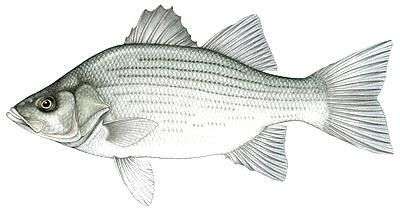
As its name suggests, the White Bass is primarily colored silvery-white to pale green. Its back is darker, but its belly and sides are white. The White Bass has narrow and dark stripes along the sides of its belly. It has rough scales that are distinctively big; it possesses two dorsal fins. Its body is compressed laterally.
To identify White Bass, look for a lateral line with around 51 to 60 scales. This species also has dorsal fins numbering 12 to 14; anal fin rays, 11 to 14; pectoral fin ray, 15 to 17; and 20 to 25 gill rakers. Another characteristic of the White Bass is its prominent tooth patch near the tip of its tongue.
Diet and Size
As a carnivorous feeder, the White Bass has at least four favorite major diet options: the leptodora, daphnia, cyclopoid copepods, and calanoid copepods. White Bass are visual feeders who will readily bite any live bait especially minnows and worms.
The White Bass can measure up to 10 to 12 inches in length; some are even recorded to have reached 18 inches. Generally, they weigh up to 7 pounds.
Interesting Facts About the White Bass
- The White Bass is Oklahoma’s state fish.
- The White Bass has gained acclaim as a significant sport fish in Manitoba since it was introduced there in the 1960s.
- The White Bass has a “fake” spinous ray. It also has a homocercal tail.
- Female White Bass lay around 240,000 to 930,000 eggs; they spawn from mid-March to late May.
- One unusual mating ritual among the White Bass is how males bump against the female’s abdomen. After that, the female goes near the surface to begin spinning and releasing eggs.
White Bass — Fishing Techniques
The White Bass is very popular among recreational anglers; in fact, this is the fifth most favored species among licensed fishers from Texas.
Once you sight a school of White Bass, make sure to use spinners or spoons along the water surface to entice them. One other common method of luring them is by using bottom fishing at night; you can also utilize live bait.
You can use small jigs as artificial lures; a 1/8 ounce marabou jig should do the trick. For best results, use jigs that are black or white. If you go for soft plastic lures, try the tube bait, or a small jig head with a curly tail grub. One other lure you can utilize is a small jig packed with soft plastic swimbaits; you can have either the 1/8 or ¼ ounce jigs.
Be careful because White Bass are known to be aggressive fighters. However, this struggle may be worth it because of its exceptional taste.
Note that every state may have some regulations as to the size, length, and other factors related to capturing this fish.
White Bass Habitat and Distribution
The White Bass are fairly distributed in the US, especially in the Midwest. They are plenty around Lake Erie and Pennsylvania. Most of the White Bass population are native to Lake Poinsett, Detroit River, Arkansas River, the Great Lakes, and the Red River drainage. They also inhabit the lakes in Winnebago, Wisconsin and the rivers in Mississippi.
This species generally inhabits big rivers and shallow rivers, reservoirs, streams, and creeks. They are often found upstream where there are high densities.
About the NauticStar Bay Boat
%2F%2Fusers%2F5fb418ba-0bb8-4644-b07b-0b16425be1dc%2Fboat_picture%2F45878935_2055296287863283_6780801922048720896_n.jpg&w=1920&q=75)
Vehicle Guest Capacity: 4
Manufacturer Name: Yamaha Engine
Maximum Cruising Speed: 40
Number of Engines: 1
Horsepower per Engine: 200

Guys enjoyed the trip! You put them where the fish were hanging out. The fish just were not super interested. Still caught 15-20!